Why Slow Can’t Be Faked
Dear friends,
For quite some time now, it feels like every fashion brand, no matter how large, has a “conscious” collection, a “green” edit, an “eco” capsule tucked somewhere on their site. It’s easy to feel a little lost in all of it. What do these words actually mean, and who gets to use them?
The honest answer is that, for the most part, very little is regulated. Terms like “sustainable,” “eco-friendly,” and “conscious” aren’t legally protected the way, say, “organic” food labelling is. Any brand can attach them to a product, whether or not there is real substance behind the claim. It isn’t just the fast fashion giants either. Over the last decade or so, I’ve noticed smaller and mid-sized brands doing the same thing, suddenly adding a page to their site making the case for how ethically their pieces are made, even when the garments themselves are produced at high volume in large overseas factories. There’s nothing inherently wrong with manufacturing that way, plenty of well-made, honestly-priced clothing comes from exactly that kind of production. But the price point and the volume usually tell their own story. It just feels like almost everyone decided they needed a sustainability page, whether or not anything about how they actually work had changed.
It’s a genuinely difficult thing for a shopper to untangle, and I don’t think that’s an accident. If everyone uses the same soft, feel-good language, it becomes very hard to tell who means it and who doesn’t. That blurring benefits the biggest players most, since a single small “green” range can quietly sit alongside a much larger, entirely conventional collection, doing very little to change the business underneath it.
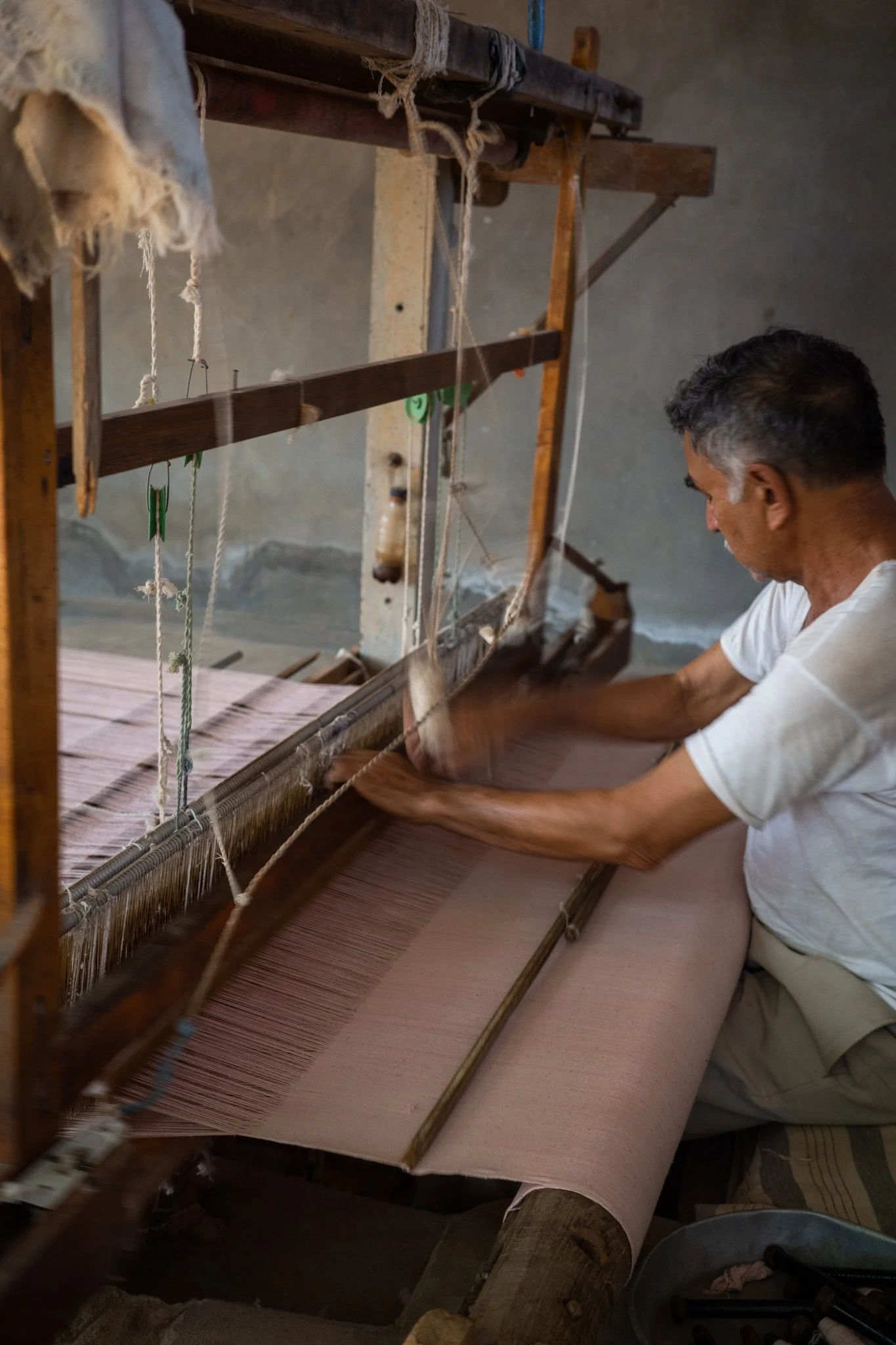
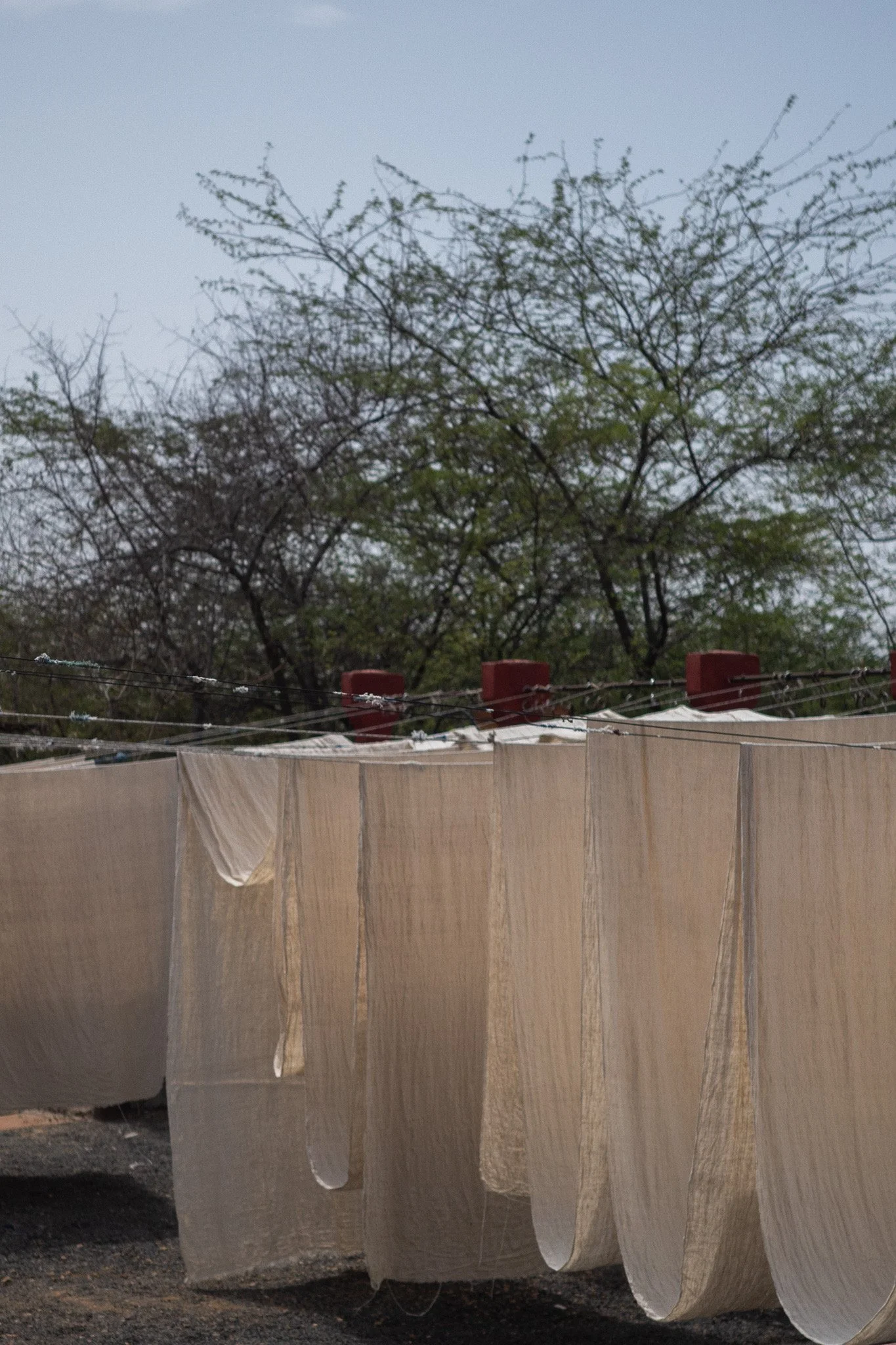
Here is the part I keep coming back to, though: the kind of slowness we work with can’t actually be faked, because it can’t be scaled. Our fabrics are handwoven by small groups of weavers, often a single family working from home, producing just a few metres a day. There is a hard ceiling on how much can be made in a season, set by human hands and traditional looms rather than a factory line. A brand producing hundreds of thousands of units simply cannot ask a cooperative like the one we work with for that kind of volume. Either the price would have to rise so steeply it stops making commercial sense, or the people weaving would need to be rushed and underpaid to hit the numbers, which defeats the purpose entirely. That, to me, is the real difference between a marketing claim and a way of working. It isn’t a line on a swing tag. It’s a structural limit, built into how the cloth is made.
I should say, too, that I’m not the ethical police, and I don’t want to pretend otherwise. If I’m honest, what pulls me toward these fabrics first isn’t a set of values I hold above everything else. It’s that I simply love them. There’s a story in a handwoven cloth, a human hand in every metre of it, and that’s what draws me in, sometimes before I’ve even thought about the ethics of it at all. Making a genuinely nice product, one I’d want to wear myself, comes first. But doing that slowly and thoughtfully has always felt like the right way to run a small business in a world so full of fast, disposable, plastic-wrapped stuff that people keep buying anyway. It isn’t a marketing position for me. It’s more like a compass. If I’m going to keep putting things out into the world, I want them to honour the people and the places that made them.
None of this means every big brand’s sustainability effort is worthless, or that small automatically means good. But it’s worth asking, gently, of any “conscious” label you come across: is this describing the whole business, or a tiny fraction of it dressed up to represent the rest? Is it something you could trace back to an actual place, an actual maker, if you asked?
For us, slow was never a marketing choice to begin with. It’s simply the only way this cloth can exist.
With love,
R